


Introducing solid foods into an infant’s diet can sometimes seem daunting, especially with all the media coverage of food allergy and allergic reactions. This article explains which babies are at higher risk, what the research tells us about early feeding, and what you can do during pregnancy and early life to support your baby’s developing immune system.
Firstly, let’s put this into context. Not all babies are at risk of food allergy and for those who may be at increased risk, research shows that giving babies peanut, dairy foods (milk, yoghurt, cheese) and eggs when they are between four and six months of age, and serving them often (two or three times per week), can help prevent food allergies developing. Delaying the introduction of these foods can have the opposite effect and increase the chance of food allergies happening.
So which babies are at higher risk of getting food allergies?
Your baby is at higher risk, if:
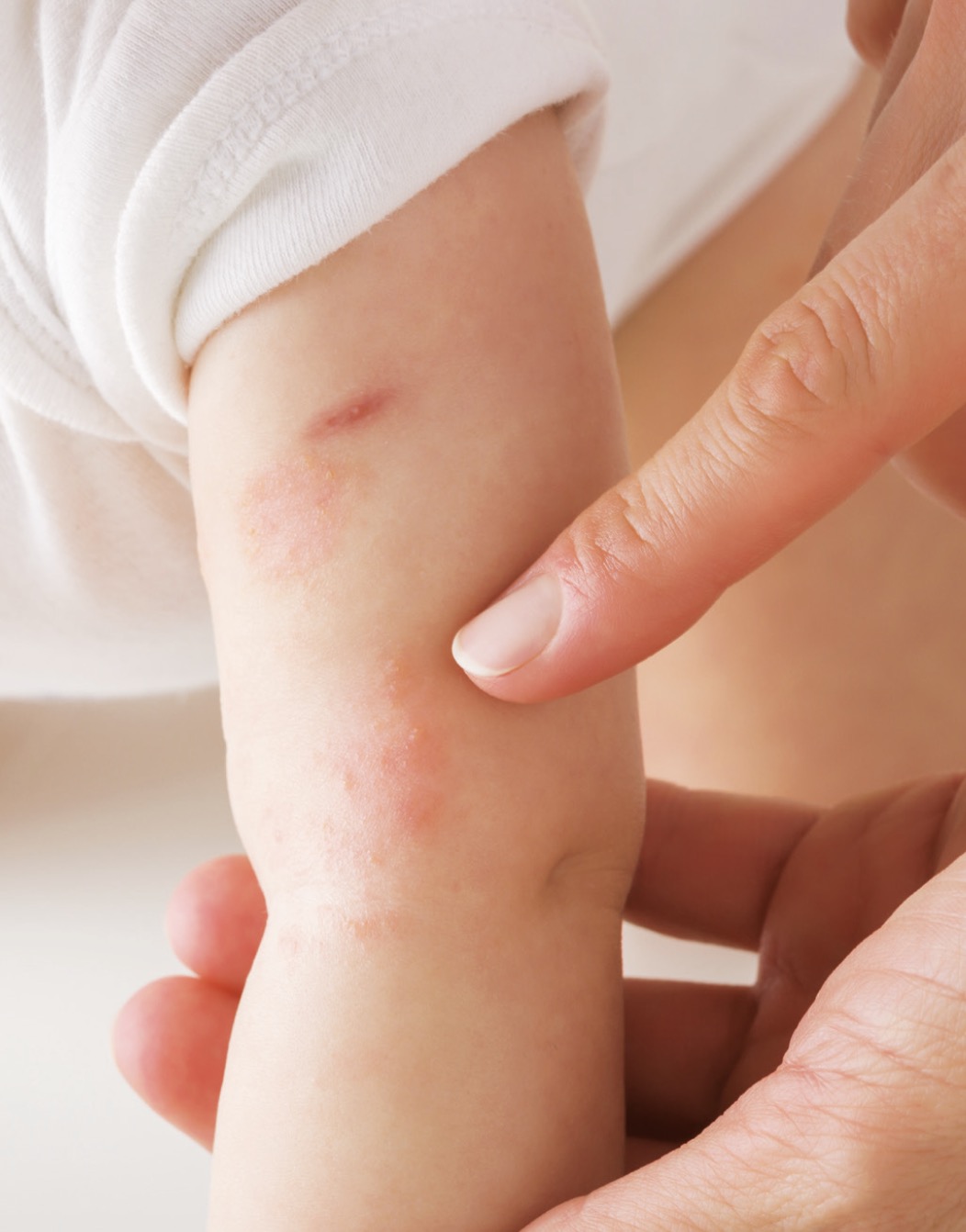
- They have eczema (especially if it is very bad, for example needs daily steroid creams and they’ve had it since they were a few months of age).
Babies who develop eczema before six months of age, particularly if it is more severe, are at highest risk for developing egg, milk, and peanut allergies.
Treating the eczema early on and using the right treatments is important, not only to reduce the distressing effects of itchy, broken skin on the baby and their family, but also to make sure the skin works as a barrier, stopping food proteins passing into the baby’s blood stream. If the skin barrier is not working well, food proteins (allergens) can enter through the broken skin and be mistaken by the immune system as harmful. The immune system then makes allergen antibodies (this is called sensitisation), which can lead to food allergy. If the baby is already eating the food, the immune system is less likely to view these food proteins as harmful. It is also best to treat the eczema and get it under control before introducing allergenic foods.
- They already have a food allergy.
Babies who already have one food allergy are at higher risk of getting others. Introducing solid foods (also known as weaning or complementary feeding) from four months of age, including egg and peanut in a suitable texture might protect them from getting other food allergies.
Foods like milk, wheat, fish, shellfish, sesame, and tree nuts should be introduced within the first year of life, if they are a usual part of the family diet.
Which babies aren’t at higher risk of food allergy?
All other babies.
If someone in your home (not the baby) has a food allergy, your baby is not at increased risk but you will need to plan how to feed your baby whilst keeping the person with the food allergy safe.
Parents often worry about their baby having a food allergy if an older child has a food allergy. However, recent studies have found that if one child has a food allergy this alone does not significantly increase the risk of another baby having one. Parents may worry about introducing foods such as egg or peanut and delay feeding their baby these foods. It is the delay in getting these foods into the baby’s diet which seems to increase the risk of the baby getting a food allergy.
Top tips for introducing first foods in your baby’s diet
Check that your baby is ready for solid foods before starting. Signs of readiness include being able to sit up and hold their head steady, showing an interest in food, and bringing their hands or toys to their mouth. If you are unsure, speak with your health visitor.
When you and your baby are ready (usually at around six months, but not before four months), begin by offering small amounts of smooth or mashed vegetables, fruit, and starchy foods. As your baby becomes more confident, move on to family foods prepared in textures that they can safely manage to reduce the risk of choking.
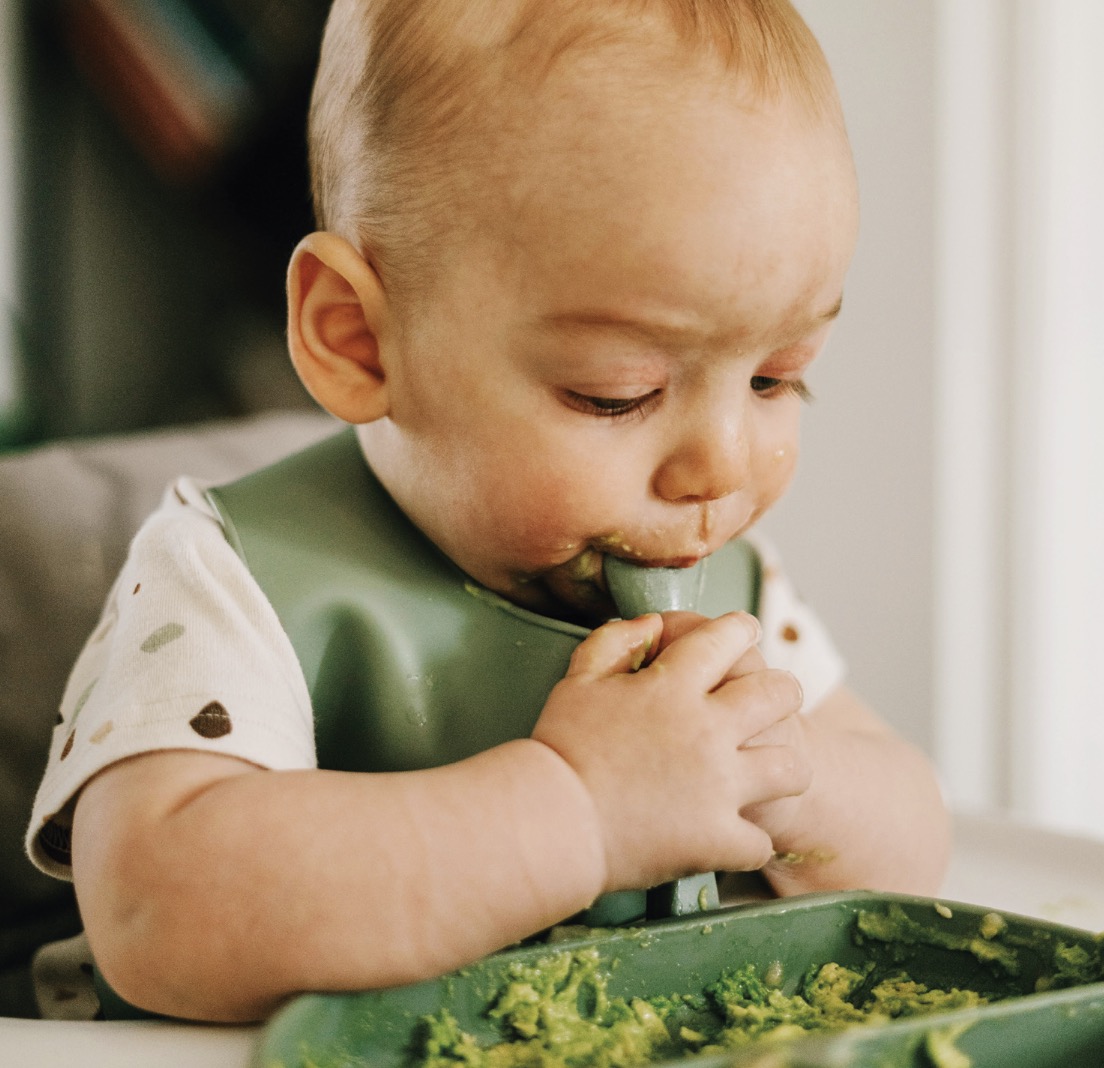
If you would like to follow a baby-led weaning approach, this is recommended from six months of age. This involves offering soft, finger-sized pieces of food in safe textures. You may choose to combine baby-led weaning with spoon feeding — there is no single “right” way.
Once your baby is managing first foods, introduce common allergenic foods one at a time. Start with a well-cooked egg, followed by peanuts, and then other foods such as fish, sesame, other nuts, dairy and wheat. Continue to offer these foods regularly if they are tolerated.
Always offer foods in a texture that your baby can safely eat.
Top tips for introducing foods often linked with food allergies
Foods that are more commonly linked with food allergies include cow’s milk and dairy products, egg, wheat, gluten, soya, fish, shellfish, sesame and other seeds, peanuts, and tree nuts.
When introducing these foods for the first time, make sure your baby is well and free from illness (no fever, no tummy upset, eczema is well controlled). Introduce a new food in the morning on a day that you can watch your baby.
Only introduce one of the allergenic foods at a time. Start with a small amount and increase slowly over the next two to three days. If your baby has no symptoms, continue giving this food at least twice per week.
Some foods can irritate the skin and cause a red rash around the mouth. This isn’t food allergy but a contact irritation. You can use Vaseline or any other barrier cream to protect the gentle skin before eating acidic foods such as citrus fruit, berries and tomatoes.
If you think that your baby is reacting to a certain food, stop giving that food and seek medical advice.
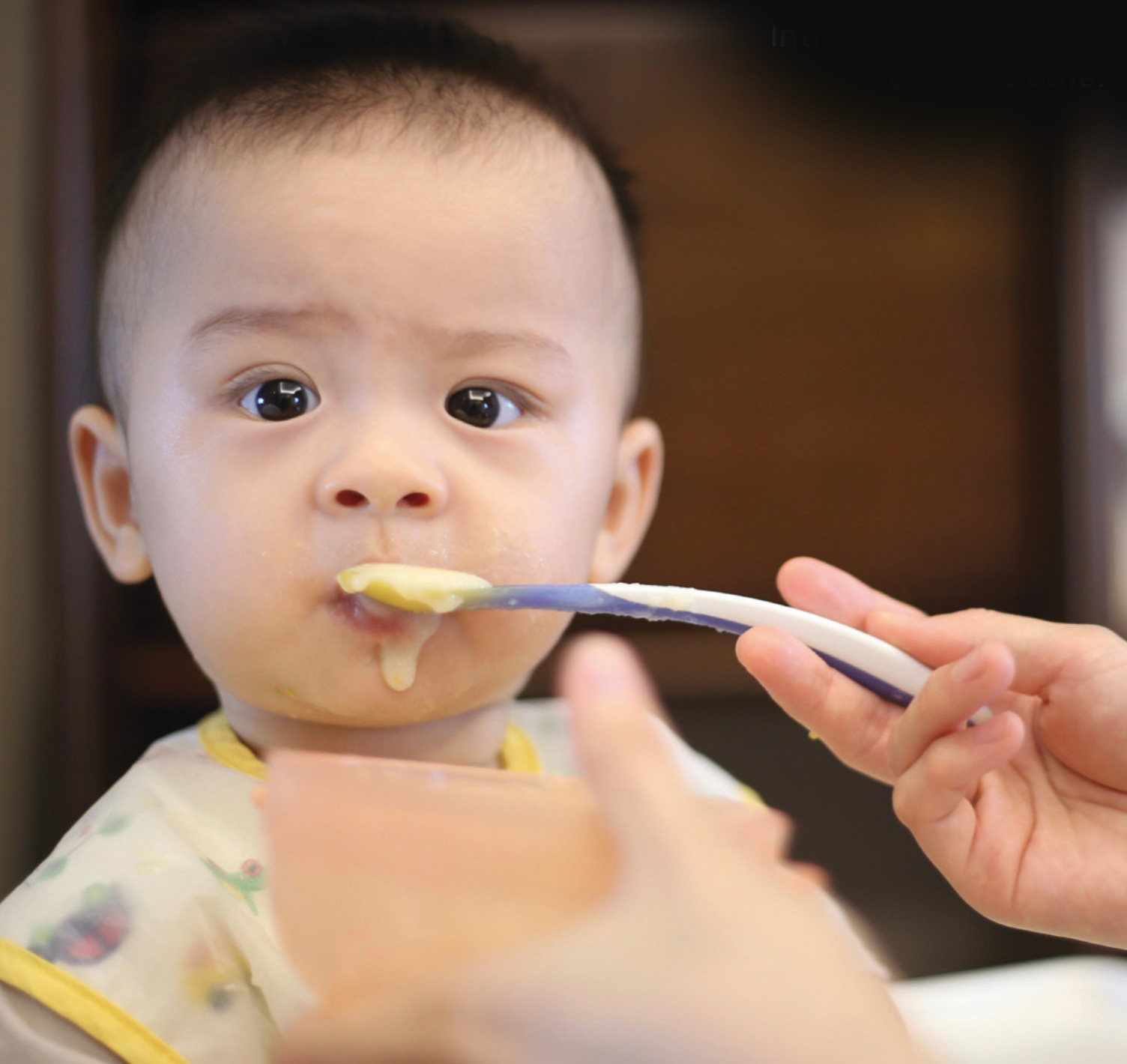
Introduce a new food in the morning on a day that you can watch your baby.
Immediate -type food allergy
Typically happen within 30 minutes of eating the food
Mild-moderate symptoms:
- Swollen lips, face, or eyes
- Itchy skin rash e.g. hives
- Tummy pain, vomiting
Severe Symptoms (rare)
- Swollen tongue, persistant cough, hoarse cry
- Difficult or noisy breathing
- Pale or floppy,unresponsive or unconscious
If your baby has any severe symptoms (anaphylaxis) immediately call 999 for help
- Mild-moderate symptoms aren’t dangerous: call 111 for advice, if needed
- Do not give the food again
- Speak to your GP about a referral to a specialist allergy team
Delayed -type food allergy
Symptoms occur hours after the food has been eaten
Gut ( Tummy) Symptoms
- Tummy pain that keeps happening,worsening vomiting or reflux
- Food refusal or aversion
- Loose or frequent bowel movements (more than six to eight times per day) or constipation/infrequent bowel movements (two or less per week)
Skin Symptoms
- Reddening skin or itchy all over
- Worsening eczema
Note: delayed reactions do not cause anaphylaxis.
- Stop the suspected food, symptoms should resolve after a few days.
- If symptoms are not severe, you can try giving the food again one to two weeks later.
- If symptoms keep happening or are severe, or your child is not growing, then see your GP
- NICE recommends that babies with any of the following should be referred to a specialist clinic:
- Faltering growth
- Reflux or gut symptoms resistant to treatment
- Food refusal
- Eczema which worsens with specific foods
Is there anything else I can do to help reduce my baby’s chances of a food allergy?
Studies have shown that eating a wide variety of foods during the first year of life might have a protective effect on asthma and food allergy. Limiting ultraprocessed foods (UPFs), giving your baby fresh and minimally processed foods may help protect against food allergies. Where possible, choose home-prepared foods or frozen meals based on whole ingredients without added sugar or salt.
Can I reduce my baby’s risk of food allergy during pregnancy or while breastfeeding?
The time from pregnancy through to your baby’s second birthday is often called the first 1,000 days. It is a very important period for the development of your baby’s immune system. A large part of the immune system is based in the gut, so looking after gut health in early life is an important consideration.
If you are breastfeeding, breast milk provides beneficial bacteria, immune factors and special fibres that help feed your baby’s gut bacteria and support immune development. Breastfeeding is encouraged for the many health benefits it brings to both mum and baby. However, it has not been shown on its own to prevent food allergy. If you cannot breastfeed for any reason, your baby can still be very healthy and thrive on standard infant formula.
During pregnancy and breastfeeding you do not need to avoid allergenic foods unless you are allergic to them yourself. Instead, aim for a healthy, balanced and varied diet. Eating a wide range of foods across the week — sometimes called diet diversity — has been linked with lower rates of allergic disease in children.
Vitamin D is recommended for all pregnant and breastfeeding mums and for breastfed babies for general health. Low vitamin D levels have been linked with more severe eczema, and supplements can improve eczema in some children who are low in vitamin D, but taking extra vitamin D in pregnancy has not been shown to prevent food allergy.
Omega-3 fats and probiotics have also been studied. Some studies have shown a lower risk of eczema when specific probiotic strains were used in higher-risk families, but there is not enough evidence to recommend them for all mums and babies to prevent food allergy.
If you would like support with breastfeeding, you can speak to your health visitor or contact La Leche League (https://www.laleche.org.uk) for free, non-judgemental support.
Where can I find information about introducing peanut, egg and other foods into my baby’s diet?
You may find some of the websites below helpful:
BSACI and BDA Food Allergy Specialist Group (2018) Preventing food allergy in your baby: Information for parents. https://www.bsaci.org/about/earlyfeeding-guidance
Allergy UK: https://www.allergyuk.org/wp-content/uploads/2022/02/Weaning-%E2%80%93-Introducing-Your-Baby-to-Solids.pdf
NHS Guidance online:
https://www.nhs.uk/baby/weaning-and-feeding/food-allergies-in-babies-and-young-children/
https://www.nhs.uk/baby/weaning-and-feeding/babys-first-solid-foods/
British Dietetic Association:
First Steps Nutrition Trust:
https://www.firststepsnutrition.org/eating-well-infants-new-mums
Solidstarts.com (U.S Based website):
A final message
Most babies will not develop a food allergy. For those at higher risk, optimising eczema is the important step. Introducing a wide range of foods, including allergenic foods, at the right time and continuing to give them regularly once tolerated gives your baby the best chance of developing tolerance and can help prevent food allergies.
Anna Pettit
Allergy Specialist Dietitian
Anna Pettit is an Allergy Specialist Dietitian specialising in children and young people with food allergies. She works at University College London Hospital allergy service(NHS), runs clinics for Allergy UK and Children’s Allergy Doctors, where she supports the oral immunotherapy service.
Anna is a founder of The London Allergy Dietitian clinic, where she provides tailored, practical support to families navigating day-to-day life with food allergies.
Anna is a member of the British Dietetic Association (BDA), the British Society for Allergy and Clinical Immunology (BSACI) and the European Academy of Allergy and Clinical Immunology (EAACI). She is currently completing a Master’s degree at Imperial College London, focusing on improving care and outcomes for adolescents and young people living with food allergies, an area she is particularly passionate about.
Sally Ann Denton
Clinical Lead For Paediatric And Adult Dietetic Allergy Services
Sally-Ann is the clinical lead for paediatric and adult dietetic allergy services at University Hospital Southampton NHSFT and the Paediatric Lead for Dietetics at Southampton Children’s Hospital. She completed an MSc in Allergy at the University of Southampton in 2012, graduating with distinction and receiving the Holgate AAIR prize for excellence in allergy.
Sally-Ann is a module lead on the Food Allergy Module of the MSc in Allergy at the University of Southampton.


