
Pollen food syndrome (PFS) is an allergic condition that affects around 2% of the UK population1. People with PFS may experience itching, tingling, and/or swelling of the lips, mouth, and throat when eating fresh fruits, raw vegetables and raw nuts which are part of the plant food family. For most people these symptoms are mild. PFS commonly occurs in people with pollen allergy who experience symptoms like sneezing, blocked or runny nose, itchy, watery eyes in spring and summer. In the UK, 66% of adults and 48% of children with allergy to birch tree pollen will have PFS.1
The most common foods involved in causing PFS symptoms in people with pollen allergy are:
• Apple, carrot, celery, kiwi, pear, stone fruits, strawberry and tomato in raw forms
• Soya milk
• Raw almonds, hazelnuts and walnuts
• Raw peanuts (e.g. red-skinned peanuts, unroasted monkey nuts)1
PFS is sometimes referred to as Oral Allergy Syndrome. However, some people with PFS may get skin symptoms when peeling or handling certain fresh or raw fruits or vegetables.
Why does it happen
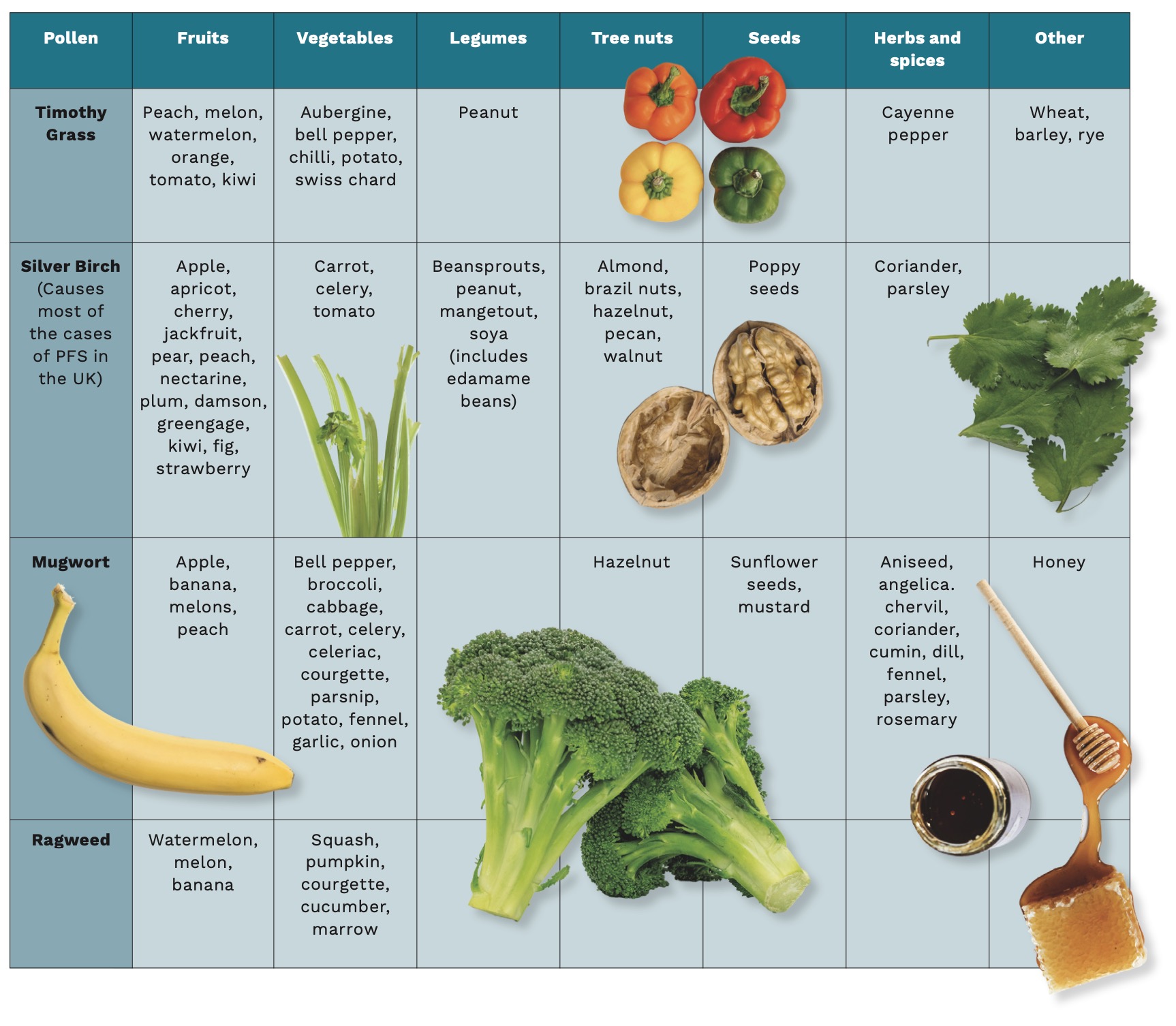
Fresh fruits, raw vegetables, and raw nuts contain proteins that have a similar shape to proteins found in pollen. People who get hay fever symptoms have an immune system that is already sensitive to pollens. In PFS, when certain fresh or raw plant foods are eaten, the immune system mistakes the proteins in plant foods for proteins in pollen. This is called cross reactivity. Table 1 shows the cross-reactivity pattern between pollens and plant foods.
Table 1. Foods that exhibit cross-reactivity with various pollens2
When the immune system confuses the proteins, this causes allergic symptoms, mostly commonly in the mouth when the food is eaten.
Skin reactions are less common but may occur when fresh or raw foods are handled. This is because the peel or skin of fruits and vegetables (e.g., potatoes, apples, peaches, tomatoes) contains high levels of proteins. Cutting or peeling certain foods releases these proteins and may cause hives or itchy rashes when in direct contact with the skin.
Most people with PFS can tolerate fruits, vegetables and nuts if they have been cooked or processed. This is because the heat breaks down the proteins in the food, so the immune system no longer mistakes it for pollen, which reduces the the risk of reactions. However, in soya milk, the proteins can still be present in large amounts despite processing, so reactions may still occur2.
Types of reaction
The most common symptoms of PFS are mild itching, burning, tingling of the lips, mouth, tongue and throat within 15 minutes of the food being eaten. Symptoms usually resolve quickly, often within an hour.
Skin reactions like itching, redness or hives on the hands, may occur if peeling or handling fresh fruits or raw vegetables. Skin symptoms are more common in children, but adults with existing eczema may find that PFS causes flare ups1.
Due to the similarity of proteins found in pollen and plant foods, eating certain plant foods may also cause hay fever symptoms like sneezing, runny nose, and itchy, watery eyes. This means PFS symptoms may be worse during pollen seasons.
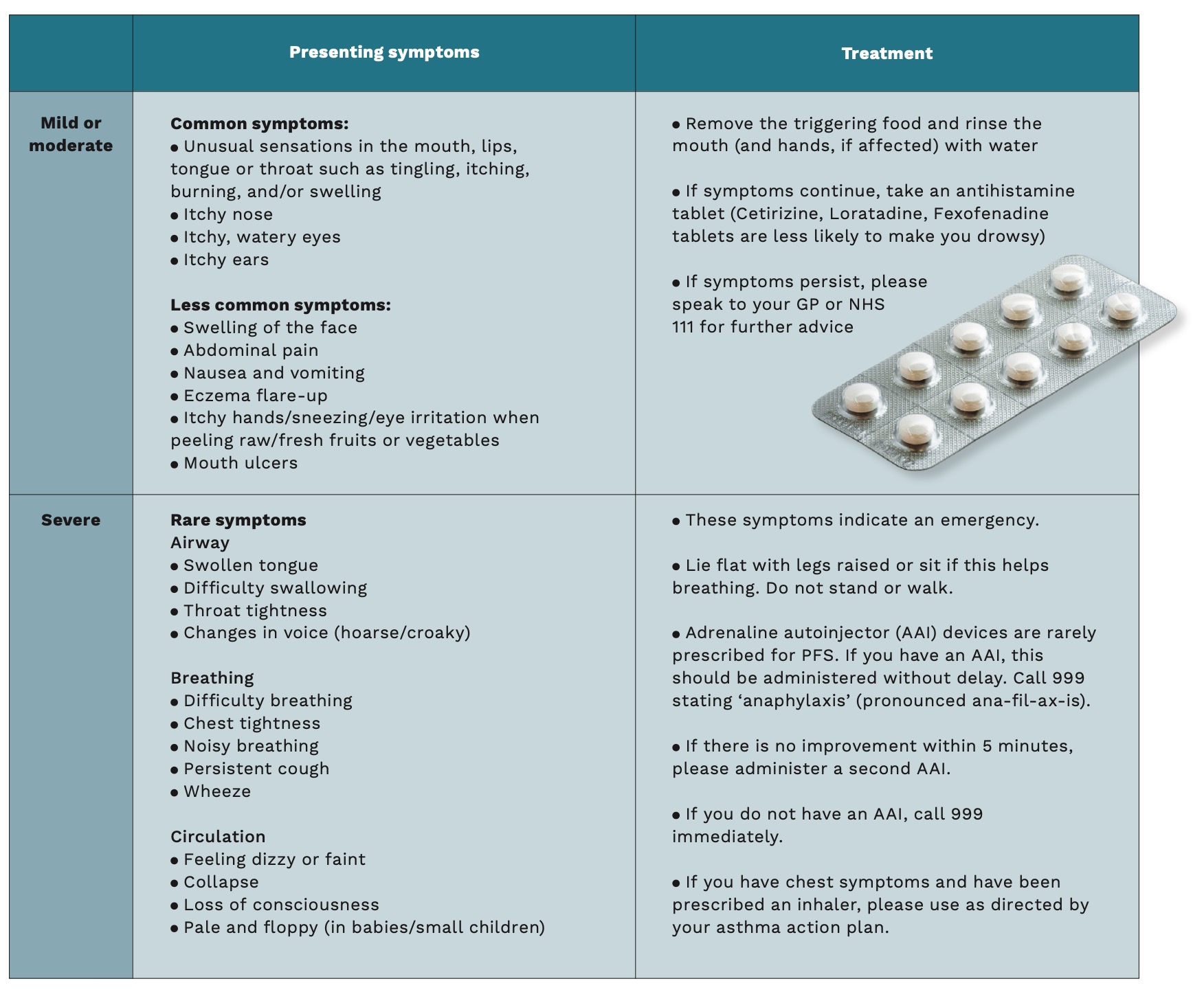
Severe reactions causing throat tightness, lip/tongue swelling, vomiting, diarrhoea, and wheezing are less common, but may still occur. Anaphylaxis (pronounced ana-fil-ax-is) a life-threatening reaction, is rare. Table 2 lists the type of PFS symptoms by severity and advice on how to manage.
Table 2. Symptoms of PFS listed according to severity and proposed treatment (adapted from Allergy UK)2
The following factors may increase the risk of a severe reaction by overwhelming the immune system and making symptoms more difficult to control:
- Eating a large amount of fresh or raw plant foods in a short space of time for, example, raw nuts, soya milk, freshly squeezed juice and smoothies
- Reactions to multiple fresh or raw plant foods
- Having uncontrolled asthma or hay fever
Diagnosis
If you experience mild symptoms when eating or handling raw fruits and vegetables and are known to experience hay fever symptoms in spring or summer, it is highly likely you have PFS and further testing is not usually required.
Some people with PFS symptoms may not experience hay fever in spring or summer. However, even without hay fever symptoms, your immune system may still be primed to identify pollen as a threat. This is called sensitisation. In this situation, allergy testing may be helpful to identify whether you are sensitised to pollen and/or plant foods that are known to cross-react. The type of testing will depend on your clinical history, types of food eaten and symptoms experienced.
If you are not sure which foods you are reacting to or are restricting your diet, it is worth keeping a food diary and speaking to your GP about your concerns.
The following symptoms are not common in PFS and require further investigation:
- Severe reactions to raw or fresh plant foods, particularly nuts or soya
- Symptoms when eating cooked, tinned, processed fruits and vegetables, and/or roasted nuts
- Reactions that only occur after eating the food and exercising or taking certain medication
Any of the above symptoms may indicate an allergy to the specific food (primary allergy) rather than due to pollen-food cross reactivity (secondary allergy). Please seek advice from your GP as referral to a specialist allergy centre may be required.

How to self-manage
The main way to manage PFS is to avoid the fresh fruits, raw vegetables and/or raw nuts that trigger symptoms. Most people can tolerate these foods when well cooked. You should only exclude the foods that you react to.
If you experience mouth or lip itching or swelling, stop eating the food and drink some water. Symptoms are usually mild and will settle within 30 minutes to an hour without treatment.
If symptoms do not settle or are causing you discomfort or concern, taking a non-sedating antihistamine tablets such as cetirizine, loratadine or fexofenadine, should provide relief. These are available from the local supermarket or pharmacy and do not require a prescription. Avoid antihistamines such as diphenhydramine (Benadryl), chlorpheniramine (Piriton), and promethazine (Phenergan) as these may make you drowsy.
Most of the proteins are found in the skin and seeds of raw fruits and vegetables. Peeling the skin or removing seeds may reduce symptoms. Wearing gloves or putting the food under water to peel may help. Make sure to wash hands after handling and avoid touching your eyes as this may cause further irritation.
Ensure hay fever symptoms are well controlled. Using an antihistamine tablet can control mild symptoms like sneezing, runny, itchy nose and eyes. Using a daily steroid nasal spray is the most effective way to reduce and prevent symptoms including nasal blockage during pollen season. It is best to start this least two weeks before the pollen season begins. Correct nasal spray technique is important to ensure medication is properly delivered to the nasal passages. Nasal spray technique can be reviewed online at: How to use a nasal spray | Asthma + Lung UK Please speak to your local pharmacist for further advice on how to manage hay fever symptoms.
Ensure that asthma is well controlled by using inhalers as prescribed. Using an inhaled corticosteroid reduces inflammation in the airways and helps prevent chest symptoms. Correct inhaler technique is important to ensure medication is delivered directly into the lungs. You can review the correct inhaler technique for your device online at: How to use your inhaler | Asthma + Lung UK Ensure you have a written Asthma Action Plan created with a healthcare professional as this provides advice on how to treat your asthma including emergency advice.
Maintaining a healthy, intact skin barrier will reduce eczema flare ups that may be caused by eating or handling fresh or raw foods. Regularly applying emollient cream (moisturiser) at least twice a day is essential to restore the skin barrier. Other medications, like topical steroids should be used as directed or prescribed to treat or prevent eczema flares.
Takeaway tips (adapted from BSACI guideline and the British Dietetic Association3)
- If your reactions are mild, relieve symptoms by drinking water to rinse your mouth out. If symptoms persist, take an antihistamine tablet. Only avoid the foods that cause symptoms.
- Risk of a more severe reaction increases if you have asthma or hay fever which is poorly controlled. Please speak to a pharmacist, nurse or GP for advice on how to manage symptoms more effectively.
- Try cooked or tinned versions of the fruits and vegetables you react to. Most people can tolerate these. Try different varieties, for example, you may not react to all types of apples. Keep a food diary if unsure about trigger foods as this will help identify patterns.
- Be careful with fresh smoothies and raw juices as these can contain large amounts of proteins. You should avoid fresh smoothies that contain any of your trigger foods.
- Stir-frying may not cook vegetables enough to prevent symptoms. Steaming and microwaving are good cooking methods.
- UK food labelling laws require the 14 major allergens (insert hyperlink: (https://www.food.gov.uk/sites/default/files/media/document/top-allergy-types.pdf) must be emphasised on ingredients labelling. Be aware that on ‘prepacked’ and foods ‘prepacked for direct sale’; fruits, vegetables and nuts will be listed but may not be emphasised in bold. It is not a legal obligation to provide a full ingredients list for non-prepacked ‘loose’ foods. Please speak to staff about whether such foods contain raw fruits, vegetables, or nuts. More information on food packaging and allergy labelling can be found here: (insert hyperlink https://www.anaphylaxis.org.uk/business/guidance-on-food-regulation/)
REFERENCES
- Skypala IJ, Hunter H, Krishna MT, et al. BSACI guideline for the diagnosis and management of pollen food syndrome in the UK. Clin Exp Allergy. 2022;52(9):1018-1034. doi:10.1111/cea.14208
- Allergy UK. Allergy Focus: Pollen Food Syndrome (PFS): A common food allergy in children and adults with increasing prevalence. November 2024. https://www.allergyuk.org/wp-content/uploads/2024/11/Allergy-Focus-Pollen-Food-Syndrome-AW-v3.pdf
- The British Dietetic Association (BDA). Pollen-Food Syndrome (PFS). March 2021. Pollen-food Syndrome (PFS) – BDA

Dr Shauna McKibben
Specialist Nurse for Clinical Immunology & Allergy at King’s College Hospital, London.
Since qualifying from Queen’s University Belfast, she has held clinical posts in allergy and respiratory across secondary care, tertiary care, and the charity sector.
She obtained a PhD in Primary Care and Public Health from Queen Mary University London, in collaboration with Asthma UK Centre for Applied Research.
Shauna was a previous editor of Allergy Update: the official newsletter of the British Society for Allergy & Clinical Immunology (BSACI). Her interests include allergic rhinitis, asthma, drug allergy, patient experience, and self-management.