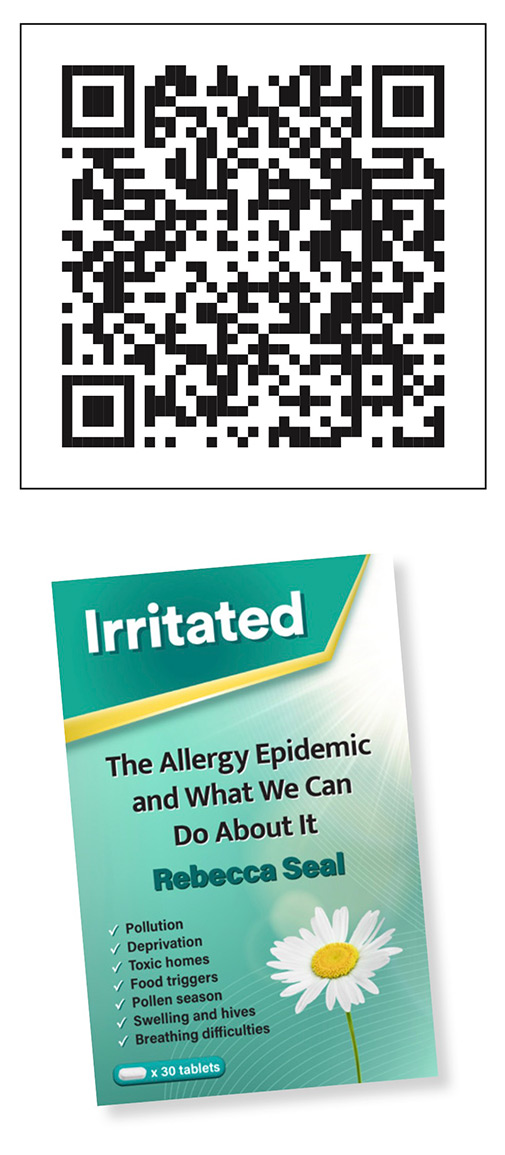
Rebecca Seal is the author of a new book about allergies called Irritated: The Allergy Epidemic And What We Can Do About It.
She tells us why she wrote the book and how she hopes it will help everyone living with allergies.
When my second daughter, Poppy, was born eight years ago, I had never restricted my diet apart from the usual no booze, no sushi and none-of-the-good-kinds-of-cheese rules that pregnant women have to follow. As a food journalist and cookbook author, even those restrictions had felt tough. I had been writing and eating professionally for 15 years, and it was a point of honour that I would at least taste anything that was put in front of me. Most of the time, that worked out well —I can’t recommend jellyfish, or grasshoppers or raw liver, but almost everything else was delicious.
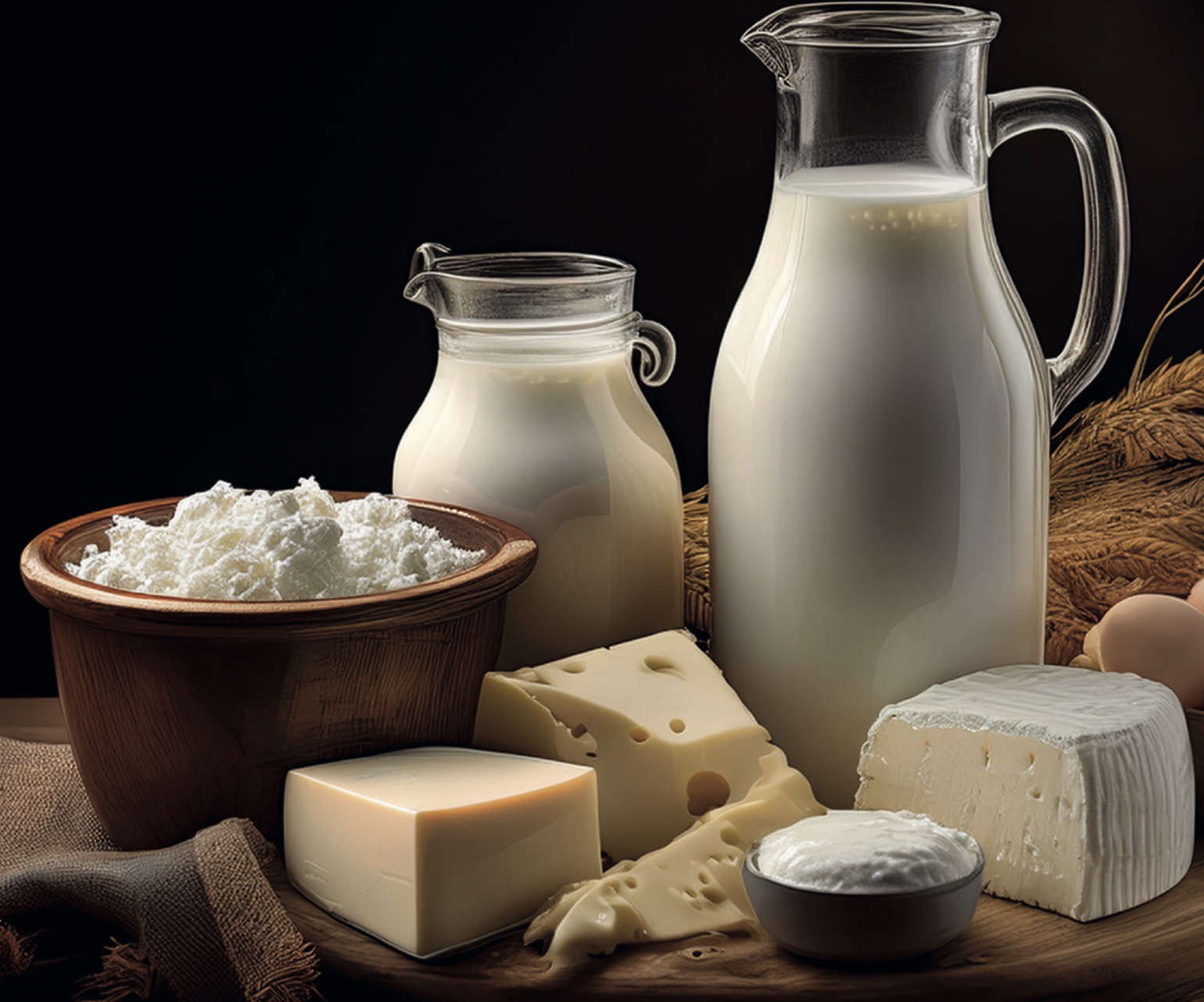
When Poppy was a few months old and still breastfeeding, it became clear that her body did not like it at all when I ate dairy or anything containing soy. Tiny amounts of some food proteins seem able to move from the gut and into breastmilk, but the mechanism for this is not well understood. (This is not a reason for breastfeeding mums to cut foods out in general: instead, it’s probable that eating these proteins actually helps prevent food allergies in most babies, gradually building up their tolerance to a range of foods before weaning.)
After restricting my diet for a few weeks and then re-trialling dairy unsuccessfully, Poppy was diagnosed with a delayed non-IgE cow’s milk protein and soy allergy, meaning dairy and soy gave her nasty gastrointestinal symptoms, but would never cause a life threatening reaction known as anaphylaxis. For the next year, I monitored what I ate religiously, but even so, her diagnosis was occasionally reconfirmed: we visited a pub where the waiter failed to realise that buttermilk-brining a chicken means that chicken now has dairy in it and, a few months later, a curry house where staff confessed the dairy-free curry I’d just eaten was made with cream. Even though Poppy’s allergy wasn’t life threatening, eating did not feel safe, and a lot of the joy it once gave me had gone.
Before Poppy, I was clueless about the impact allergies can have on a person’s life, or that of a family. I didn’t know what it was like to obsessively label check, or avoid eating anywhere but home, or hover at birthday parties, worrying about what was in the cake and where the crumbs were getting. It quickly became clear to me that while I had been blithely enjoying my food, there were many, many people who were having a much more complicated experience of it.
Once we joined that gang, I wanted to understand why we were in it. I wanted to know why allergies were on the rise, whether we were looking after people with allergies properly and if we could do anything to stop them developing.
First, I did what most allergy parents do: I went online. I joined Facebook groups and read about what other parents and adults were doing to try to figure out what was wrong with their children’s guts, skin and immune systems, or their own.
Allergies can be isolating and being part of a supportive community is important, but what I found horrified me. Even though I knew very little about allergies back then, I saw instantly that things were very bad indeed: hardly any of the groups had moderators or medics tracking questions and answers. Everyone was like me, all doing their best but with little accurate or credible information to rely on, while waiting months or years to see an allergy doctor or dermatologist. We were all wading through a sea of contradictory information and misinformation, mostly handed out by people who were well-intentioned but frighteningly under-informed about the facts of allergy, asthma and eczema.
In late 2023, I started work on Irritated. Naively, I thought I could write it in a year, but that didn’t even give me enough time to do the research and interview everyone I wanted to talk to — over 40 allergy consultants, immunotherapy researchers, microbiologists, allergy nurses, campaigners, geneticists, asthma doctors, dermatology professors, dietitians and specialist psychologists, as well as more than 20 families and adults living with allergies themselves.
I’ve since spent more than two-and-a-half years talking, reading and thinking about almost nothing but allergies. (The book has 538 studies and articles in the bibliography, but please don’t let that put you off.)
Now I know far more about them, the posts I still read every day in Facebook allergy groups and on TikTok terrify me.
I see parents being told not to vaccinate their children against potentially fatal illnesses like measles, even though studies of hundreds of thousands of children have shown there is no connection between vaccines and allergies, regardless of when or how they are given.
I see parents being advised to cut or never even introduce dozens of nutritionally crucial foods from young children’s diets, something which is statistically likely to create anaphylaxis-type allergies to those foods, rather than prevent intolerances or improve eczema.
I see people being told to try alternative therapies to “cure” allergies, like NAET treatments, – which are at best an expensive sham and at worst, very dangerous — or to eat pollen to “cure” hay fever (this can cause anaphylaxis), or to try the carnivore diet to “reset” their immune systems.
I see people being warned to shun topical steroids and emollients and treat eczema with oils, balms and “natural” products, many of which contain food ingredients like sesame, milk, oat, almonds or soy, and which studies have shown can be linked to the development of food allergies to those exact foods.
And I see people being encouraged to buy IgG blood tests or hair strand tests to try and work out allergies and intolerances, even though there is no scientific basis whatsoever for their results.
Health misinformation on social media is far worse now than it was eight years ago. But given how hard it can be to see a GP in some parts of the UK, let alone get a referral to a specialist, it can be almost impossible to get access to good, expert-backed, scientifically accurate information about allergies.
This is why I want Irritated to reach as many people as possible.
Here are just a few of the things I found out while writing it:
Having a child with allergies or developing an allergy as an adult is not your fault, but the result of a complicated web of genetics and environmental experiences over which we have almost no control. It is not because you had a c-section, or didn’t breastfeed.
Lots of things make allergies worse, or more likely to develop, and that means there are things we can do to make them better, too. Living in deprivation can make allergies worse, especially for children. Living in damp and mouldy housing can make allergies worse. Pollution can make allergies worse, especially for children and especially in inner-cities. The chemical soup of cleaning sprays, fragrances and detergents that we marinate in at home and work can make allergies worse. Having eczema which isn’t properly managed can make you more likely to develop allergies later on.
Some things make allergies easier to manage and even treat — not just equitable access to healthcare (although that would be an excellent start) but also things like spending time in nature, from an early age and throughout our lives. This has been shown in studies to improve allergy and asthma symptoms and make us less likely to develop allergies at all. And there are incredibly exciting new allergy treatments being researched right now, which have the potential to transform the lives of people living with allergies.
Allergies don’t have to be an intractable problem. There is hope. But only if the right information reaches patients, parents and families.
Rebecca Seal
is the author of a new book about allergies called Irritated: The Allergy Epidemic And What We Can Do About It.
https://www.amazon.co.uk/Irritated-Allergy-Epidemic-What-About/dp/1035419084